A hip fracture is a painful injury that comes with a difficult recovery. Many people experience long-term decreases in quality of life after breaking a hip, and some people never get back to their previous level of function. However, it is not hopeless — after a hip fracture, there are some things you can do to help you get back on your feet and back to your lifestyle.
“The most important thing for people to understand about recovery following a hip fracture is the importance of early mobilization, good nutrition, and perseverance, since improvement can be seen up to one year after surgery,” said Summit sports medicine and orthopedic trauma specialist Andrew Samborski, MD.
Types of Hip Fracture Surgery
Although every patient is unique, there are two broad categories of hip fracture surgery:
- Hip replacement — many people will need a hip replacement (partial versus total), removing the damaged joint and putting an artificial joint in its place
- Open reduction and internal fixation — placing screws, rods, or plates to keep the fractured bone in appropriate length, alignment, and rotation while it heals
Hip Fracture Recovery: What to Expect
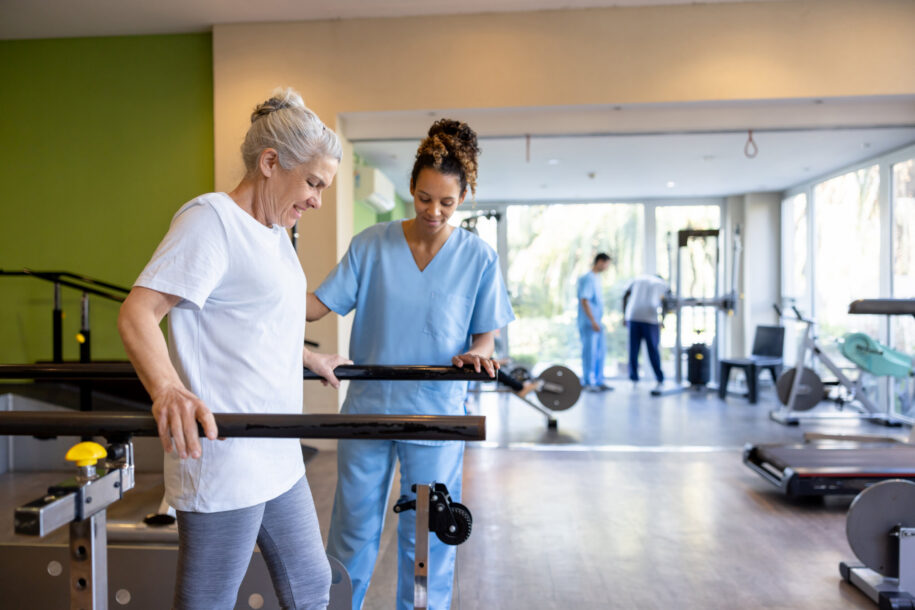
You may be surprised to learn this, but your rehabilitation will begin shortly after you wake up after surgery. You will begin doing physical therapy (PT) right away to help you strengthen the muscles around your hip. You’ll continue to do physical therapy for several months after your surgery, and here, the power is largely in your hands. Doing the recommended exercises as often as your physical therapist advises you to can help you restore function sooner while minimizing pain and stiffness.
You should also expect to use a walker, crutches, or a cane as you recover. This helps you stay balanced and steady as your bones heal. These assistive devices may be temporary or permanent.
Hip Fracture Rehabilitation Tips
- Follow your physical therapist’s advice — even though it’s painful. It is designed to help you optimize regaining your function.
- Encourage yourself to move around after you get back home — getting up out of that chair is even more important now.
- Keep your social bonds strong — after you heal, it can be tempting to shy away from social outings, partly out of a fear of falling again. Although safety is most important, staying socially active will help you fight off loneliness — and can give you another reason to get up in the morning.
“Remember: the path of recovery will have highs and lows; however, the general trajectory is improvement. Approach your recovery with a strong will and give yourself some grace, since this can be a long and difficult recovery.”