Trochanteric bursitis is a type of hip bursitis that affects the trochanteric bursa, which is found in part of the hip joint called the greater trochanter. Bursitis causes inflammation of that bursa, leading to hip pain and other symptoms.
Your joints serve as connectors throughout the body, linking one bone to another. Around most of those joints, you’ll also find bursae—small, jelly-like sacs containing a small amount of fluid. They act as a cushion between bone and soft tissue, helping reduce friction when the joint moves.
Trochanteric bursitis causes inflammation in the bursa between the bony point on the outside of the hip and the muscles and tendons that help the hips move. It’s different from iliopsoas bursitis, another type of hip bursitis that affects a bursa on the inside of the hip.
If you’re experiencing hip pain, the first step toward finding relief is an accurate diagnosis. Turn to Summit Orthopedics, where our team of orthopedic and sports medicine experts in the Minneapolis/St. Paul area has years of experience in diagnosing, treating and managing conditions affecting the hips, including bursitis.
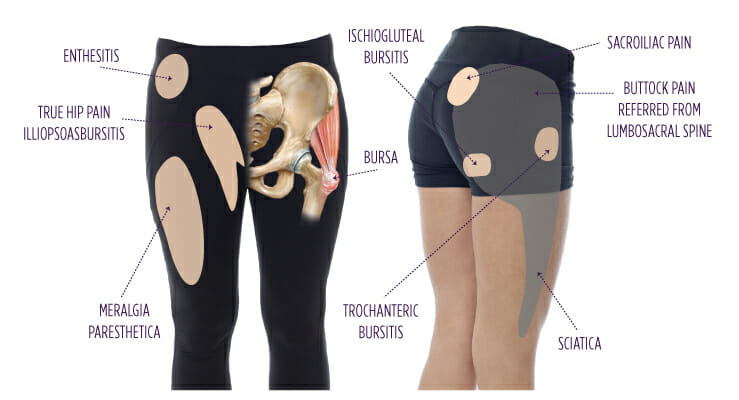
Symptoms of Trochanteric Bursitis
When trochanteric bursitis develops, hip pain is the primary symptom. Other symptoms of trochanteric bursitis may include:
- Discomfort during activities requiring hip motion
- Pain when lying on the affected hip
- Tenderness in the hip area
Pain from trochanteric bursitis is most often felt at the point of the hip, but can extend to the outside of the thighs and the buttocks. At first, this pain may feel sharp and intense. Over time, it may become more like an ache affecting a larger section of the hip.
Causes and Risk Factors for Trochanteric Bursitis
Trochanteric bursitis occurs when something irritates the trochanteric bursa. Anyone can develop the condition, but it’s more common among people with certain risk factors.
Factors that make you more likely to develop trochanteric bursitis include:
- Bone spurs or calcium deposits in the tendons around the greater trochanter
- Having one leg that’s shorter than the other
- Hip injury
- Previous hip surgery
- Repetitive motions
- Rheumatoid arthritis
- Spine disease
A tight iliotibial band (IT band) can also lead to trochanteric bursitis. The IT band is a tendon that extends from the top of the pelvis to just below the knee. When it’s tight, it can put pressure on the trochanteric bursa, causing bursitis.
You’re also more likely to get trochanteric bursitis if you have a chronic condition that causes more inflammation in your body, like diabetes, gout, psoriasis or psoriatic arthritis, or thyroid disease.
How Trochanteric Bursitis Is Diagnosed
If you’re experiencing hip pain that may be caused by trochanteric bursitis, an orthopedic specialist usually diagnoses the condition using a physical exam. During the appointment, the provider carefully examines the outside of your hip, testing for tenderness around the bony part where the femur meets the pelvis.
You’ll also answer questions about your symptoms, including when they occur and how they affect your movement, mobility and daily activities. The information you share will help your provider determine a diagnosis and identify the best treatment for your symptoms.
In addition to a physical exam, your provider may order certain tests, including X-rays, an MRI or a bone scan, to rule out other potential causes of your symptoms.
Nonsurgical Treatment for Trochanteric Bursitis
Most In most cases, you can effectively treat trochanteric bursitis with nonsurgical measures, including at-home care. Your treatment plan may include:
- Assistive devices. If trochanteric bursitis causes significant discomfort, particularly when walking, using a cane or crutches may temporarily take pressure off the hips.
- Corticosteroid injections. These medications, injected directly into the affected hip, temporarily inhibit inflammation and reduce swelling.
- Nonsteroidal anti-inflammatory drugs (NSAIDs). These medications, available over the counter and by prescription, help reduce inflammation and relieve pain.
- Pain relievers. If you’re unable to take NSAIDs, you may benefit from taking acetaminophen to alleviate pain.
- Physical therapy. Exercises performed with a physical therapist or on your own can help to release a tight IT band or increase hip strength and flexibility. A physical therapist can also teach other techniques that may provide relief, such as hip stretching, massage and ice or heat therapy.
- Weight loss. Even a small weight loss can reduce pressure on your hips.
Because trochanteric bursitis can be caused by repetitive motion, avoiding certain activities or movements may help you prevent it or alleviate it. This includes avoiding sports or exercises that put pressure on the hip, such as running, bicycling or stair climbing. Even standing for too long can be problematic and may need to be avoided.
Surgical Treatment for Trochanteric Bursitis
Surgery is rarely needed for trochanteric bursitis, but it may be recommended in severe cases that aren’t helped by nonsurgical treatment options. Surgery for trochanteric bursitis involves the removal—or resection—of the trochanteric bursa.
Because the hip joint can function effectively without the bursa, removing it can help to alleviate discomfort while preserving normal hip movement.
Resection may be performed with a traditional (open) surgical procedure or with endoscopic techniques, which require only a tiny incision to access the bursa. Both are outpatient procedures.
Care for Trochanteric Bursitis at Summit Orthopedics
An inflamed bursa may seem like a minor issue until it causes significant pain in the hip joint. If you’re experiencing the symptoms of trochanteric bursitis, specialists at Summit Orthopedics can diagnose the cause of your symptoms and determine how to most effectively treat them.
Summit Orthopedics surgeons are available at nearly 30 convenient locations across the Minneapolis/St. Paul metro area, serving Minnesota and western Wisconsin. Our state-of-the-art, comprehensive orthopedic centers offer same-day appointments from a team of experts who offer the full scope of orthopedic care.
Find your Summit Orthopedics hip expert, request an appointment or call us at (651) 968-5201 to schedule a consultation.