THip impingement is a condition that occurs when bones in the hip joint don’t fit together properly. This causes the bones to rub together when the hips move, leading to pain.
Getting an accurate diagnosis is the first step toward finding relief. Turn to Summit Orthopedics, where our orthopedic specialists in the Minneapolis/St. Paul area have specialty training in diagnosing, treating and managing hip impingement.
Understanding Hip Anatomy
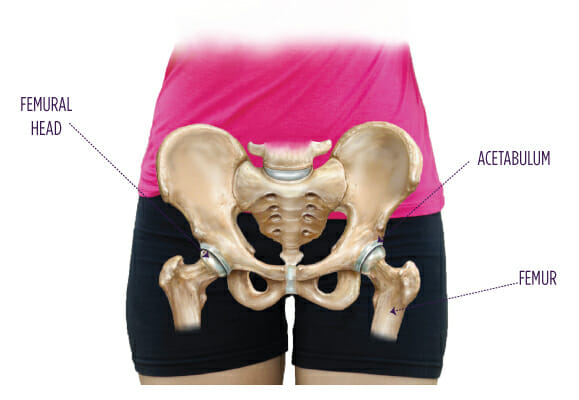
FeYour hip is a “ball-and-socket” joint. The socket of the hip joint, called the acetabulum, is on the outer side of the pelvis, while the ball, known as the femoral head, is at the top of the thigh bone.
Both your ball and socket are covered by articular cartilage, a slippery tissue that helps the hip bones slide across each other. The hips also contain the labrum, a stronger cartilage that creates a seal around the socket.
Each component of the hip joints plays a key role in helping you move, so when part of the joint is abnormally shaped, it can create friction and hip pain.
Types of Hip Impingement
Hip impingement is also called femoracetabular impingement (FAI). There are three types of FAI, differing in why the hip bones don’t fit together well:
- Cam impingement: The femoral head isn’t round, which means it can’t rotate smoothly inside the socket. This causes a bony bump to form on the femoral head, rubbing against cartilage in the acetabulum.
- Pincer impingement: Extra bone grows on the hip socket, extending over the acetabulum, which can crush the labrum.
- Combined impingement: This type of hip impingement involves both cam and pincer impingement.
Many people who have hip impingement have combined impingement, also called mixed impingement.
Symptoms of Hip Impingement
Hip impingement can cause symptoms affecting the groin area or the outside of the hip, including:
- Difficulty moving
- Limping
- Pain
- Stiffness
You can experience the pain associated with hip impingement in different ways. It may feel like a dull ache, or it may be a sharp pain felt when squatting, twisting or turning the hips.
In some cases, those with hip impingement don’t experience any noticeable symptoms. Symptoms are more likely as impingement worsens, damaging cartilage in your hip joint.
Causes of Hip Impingement
Hip impingement is most often caused by an abnormally shaped ball or socket in the hip joint that’s present at birth. It can also develop as a result of bone overgrowth, or bone spurs.
Less commonly, hip impingement can develop as a complication of slipped capital femoral epiphysis. That condition, which occurs in children and teens who are still growing, causes the head of the thigh bone to slip backward.
How Hip Impingement Is Diagnosed
MDuring an appointment about hip pain and other symptoms, an orthopedic specialist asks you questions about the symptoms you’re experiencing and performs a physical exam.
This exam includes an impingement test, where your knee is brought up toward your chest and rotated inward. Your provider may ask you to move into other positions, or they may maneuver you into those positions. If those movements cause hip pain, the test is positive for hip impingement.
In addition to the impingement test, your provider may order imaging tests, such as an MRI or a CT scan, to get a clear view of the hip joints. Numbing the hip joint with a local anesthetic can also help diagnose hip impingement—if the numbing agent temporarily relieves hip pain, hip impingement is likely the cause.
Nonsurgical Treatment for Hip Impingement
If you’re diagnosed with hip impingement, your provider may suggest you first try nonsurgical treatment options to relieve pain. This may include:
- Changing your activities. Hip pain and other symptoms caused by hip impingement often worsen with certain movements, such as squatting, jumping or lying on your side. Avoiding or limiting those movements can help minimize pain.
- Participating in physical therapy. Working with a physical therapist can help you learn exercises to improve the range of motion in your hip joints and strengthen the surrounding muscles.
- Taking anti-inflammatory medications. Your provider may suggest taking non-steroidal anti-inflammatory drugs (NSAIDs), available over the counter or by prescription, to alleviate inflammation and hip pain.
In some cases, an orthopedic specialist may recommend corticosteroids as part of your treatment plan. You can take these medications orally, or they may be injected directly into your hip joint.
Surgical Treatment for Hip Impingement
If you’re experiencing severe pain from hip impingement that isn’t relieved by nonsurgical treatment options, your provider may recommend surgery to treat the condition. They may also recommend surgery in cases where imaging scans show joint damage caused by hip impingement.
Multiple surgical procedures may treat hip impingement, but hip arthroscopy is the most common. Hip arthroscopy is a minimally invasive procedure used to examine the hip joint and repair damage.
During hip arthroscopy, an orthopedic specialist accesses the inside of the hip through tiny incisions, then inserts a small camera into the joint. The camera provides a real-time view inside the body, allowing the provider to explore the hip joint and look for damage.
Guided by that view, the specialist can repair labral or acetabular cartilage damage or correct hip impingement by shaving down excess bone growth.
Care for Hip Impingement at Summit Orthopedics
If you’re diagnosed with hip impingement, you can find the care you need at Summit Orthopedics. Our team of hip specialists has years of experience diagnosing and treating hip-related conditions, including hip impingement. We offer the highest standard of care to those in our communities for both nonsurgical and surgical treatment of hip impingement.
Summit Orthopedics surgeons are available at nearly 30 convenient locations across the Minneapolis/St. Paul metro area, serving Minnesota and western Wisconsin. Our state-of-the-art, comprehensive orthopedic centers offer same-day appointments from a team of experts who offer the full scope of orthopedic care.
Find your Summit Orthopedics hip expert, request an appointment or call us at (651) 968-5201 to schedule a consultation.