Maybe it’s the ache when you reach for something on a high shelf, or the stiffness that greets you every morning. Maybe it’s a grinding sensation your shoulder makes that wasn’t there a few years ago. Whatever brought you here, shoulder arthritis is a real and treatable condition—and you don’t have to just live with it.
Most people find meaningful relief without surgery. At Summit Orthopedics, our specialists in the Minneapolis/St. Paul area start by understanding your symptoms and your goals, then build a care plan around what matters to you.
What Is Shoulder Arthritis?
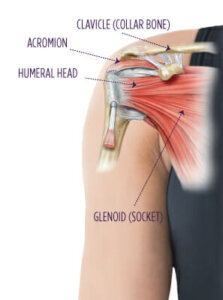
Your shoulder joint is cushioned by cartilage—a smooth, slippery material that lets your arm bones glide against each other without friction. When that cartilage wears away, bones begin to rub together. The result is pain, stiffness and sometimes bone spurs (small bony growths) that limit how far you can move your arm.
There are five main types of shoulder arthritis:
- Avascular necrosis: In this type, the bone loses its blood supply and begins to break down. It can follow a serious injury or certain medical treatments.
- Osteoarthritis: This is a degenerative disease in which cartilage and joints gradually break down. It most often affects adults over 50.
- Post-traumatic arthritis: This develops weeks to months after a shoulder fracture or dislocation.
- Rheumatoid arthritis: This autoimmune condition allows the immune system to attack the joint lining, which causes inflammation and cartilage loss.
- Rotator cuff tear arthropathy: This occurs when a large, long-standing rotator cuff tear alters shoulder motion, eventually damaging the joint.
What Shoulder Arthritis Feels Like
Shoulder arthritis often begins with subtle stiffness and a pain that gradually becomes harder to ignore. Many notice an audible clicking and grinding sensation during arm movement. As the condition progresses, simple tasks like reaching overhead or dressing become painful. This persistent discomfort—often accompanied by swelling or weakness—signals that the joint is losing its smooth, natural function.
Causes and Risk Factors
Shoulder arthritis rarely has a single cause. It usually develops when several factors combine over time.
- Age: Cartilage wears down naturally with time. Adults over 50 are more likely to be affected, though it can occur earlier.
- Autoimmune conditions: Rheumatoid arthritis and similar conditions drive inflammation that damages joint tissue from the inside out.
- Previous injuries: A fracture, dislocation or significant shoulder trauma can set the stage for arthritis.
- Repetitive overhead use: Construction work, painting or sports like tennis and swimming increase the risk for shoulder arthritis.
- Rotator cuff tears: A long-standing tear shifts how forces move through the shoulder joint. This allows bones to rub against each other, damaging their surfaces.
When to See a Doctor
Not every ache needs an appointment. But if your shoulder pain interferes with daily life, getting an evaluation sooner gives you more options. Come in if you’re dealing with:
- A grinding or locking sensation that’s new or getting worse
- Pain that has lasted more than a few weeks without improvement
- Pain that wakes you up at night
- Stiffness that limits how far you can move your arm
- Swelling, warmth or redness around the joint
- Trouble getting dressed, driving or reaching
Diagnosing arthritis before it becomes severe usually means more nonsurgical treatment options—and better outcomes.
How We Diagnose Shoulder Arthritis
Your appointment starts with a conversation about your symptoms of shoulder arthritis, your history, any past injuries and how the pain affects your life. Then your provider examines your shoulder, checking range of motion, strength and where exactly it hurts.
Doctors typically order imaging to confirm a diagnosis of shoulder arthritis:
- CT scan: Provides a closer look at bone structure; helpful when doctors are considering surgery
- MRI: Reveals soft tissue detail and cartilage condition
- X-rays: Show bone changes, joint space narrowing and bone spurs
If rheumatoid arthritis or another autoimmune condition is suspected, your doctor may order blood tests to check for specific markers.
Treatment Options for Shoulder Arthritis
Treatment depends on which type of arthritis you have, how far it has progressed and which activities you do regularly. We always start with the least invasive approaches. Surgery comes into consideration only when other options have failed.
At-home Treatments
Medications
Several medication options can ease pain and inflammation.
- Corticosteroid injections deliver anti-inflammatory medication directly into the joint, often providing significant—though temporary—relief.
- Disease-modifying medications can slow rheumatoid arthritis-relatedjoint damage over time.
- Over-the-counter anti-inflammatories like ibuprofen or naproxen work well for many people.
- Prescription medications are recommended when standard options are not enough.
- Topical creams and gels applied directly to the shoulder offer localized relief without systemic side effects.
Physical Therapy
Targeted physical therapy exercises strengthen the muscles supporting the shoulder joint, reduce pain and restore range of motion. Physical therapy may help you avoid surgery.
Surgical Treatments
When nonsurgical options have not helped your pain, surgery may be the next step. Our surgeons will walk you through your options and what is involved with each, including risks, recovery and realistic outcomes, before making any treatment decisions.
- Shoulder arthroscopy: This minimally invasive option for mild to moderate arthritis uses a small camera and instruments inserted into the shoulder through tiny incisions. The surgeon removes damaged tissue and other potential sources of joint damage. Recovery is typically faster than open surgery.
- Total shoulder replacement surgery: The surgeon replaces damaged joint surfaces with artificial components. This procedure is known for reducing pain and restoring function in people with severe osteoarthritis or rheumatoid arthritis.
- Reverse shoulder replacement surgery: If you have an injury like a torn rotator cuff in addition to your arthritis, a reverse replacement may work better than a traditional one. The design allows other muscles to take over, compensating for the damaged rotator cuff.
Shoulder Arthritis Care at Summit Orthopedics
Shoulder pain touches everything—your work, your sleep, your ability to do the things you actually enjoy. Our shoulder specialists understand that, and they bring that perspective to every appointment.
We offer the full range of care under one roof: physical therapy, injections, imaging and surgical expertise when it’s needed. What we don’t offer is a one-size-fits-all approach. Your doctor will build your plan around your specific diagnosis, your activity level and what you want to get back to doing—whether that’s hiking, sleeping through the night or just putting on a coat without wincing. Summit Orthopedics surgeons are available at nearly 30 convenient locations across the Minneapolis/St. Paul metro area, serving Minnesota and western Wisconsin. Our state-of-the-art, comprehensive orthopedic centers offer same-day appointments from a team of experts who offer the full scope of orthopedic care.