Something doesn’t feel right with your shoulder. Maybe it slipped during a workout, or it just feels “loose” in a way that’s hard to explain. If a doctor has mentioned shoulder instability, it’s normal to have questions.
Shoulder instability is common—and very treatable. With the right care here at Summit Orthopedics, our specialists in the Minneapolis/St. Paul area help many people improve without surgery and return to the activities they enjoy.
What is Shoulder Instability?
The shoulder is the most mobile joint in the body. It’s a ball-and-socket joint, where the top of the upper arm bone (the humeral head) fits into a shallow socket in the shoulder blade.
That design allows a wide range of motion, but it also makes the joint easier to destabilize.
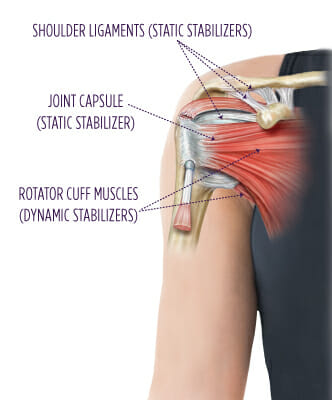
Shoulder instability happens when the structures that hold the joint in place—muscles, ligaments and tendons—become stretched, torn or weakened. When that happens, the humeral head may:
- Slip partially out of place (subluxation)
- Come fully out of the socket (dislocation)
Even without a full dislocation, a loose shoulder can cause pain, weakness and difficulty with everyday movements like reaching, lifting or sleeping comfortably.
Types of Shoulder Instability
Not all shoulder instability is the same. Understanding the type helps guide treatment.
- Anterior instability: This is the most common type. The humeral head slips forward, often after a fall or injury.
- Bankart lesion: This occurs when the labrum (the cartilage around the edge of the socket) tears.
- Multidirectional instability: The shoulder is loose in more than one direction, often due to naturally flexible joints.
- Posterior instability (also called a reverse Bankart lesion): The humeral head moves backward. It is less common.
Causes of Shoulder Instability
Shoulder instability can develop from one or several factors.
Common causes include:
- A previous shoulder dislocation or subluxation that stretched or tore ligaments
- Naturally loose connective tissue that makes joints more flexible
- Repetitive overhead movements, such as swimming, throwing or lifting
When these structures don’t provide enough support, the shoulder may feel unstable during daily activity.
Symptoms of an Unstable Shoulder
Symptoms vary from person to person. Some people have a clear injury, while others notice gradual changes over time.
Common symptoms include:
- A feeling that the shoulder may slip, pop or give out
- Clicking or popping in the joint
- Limited range of motion
- Pain with movement, especially overhead
- Repeated dislocations or a sense of looseness
- Weakness or reduced strength
Without treatment, instability can worsen over time. Repeated episodes may lead to ongoing pain or joint damage.
Diagnosing Shoulder Instability
An accurate diagnosis is the first step toward effective treatment.
Your provider will begin with a physical exam, checking:
- How stable the joint feels during movement
- Range of motion
- Strength
Imaging may provide details that help your doctor better understand the condition:
- CT scans: These are useful for identifying bone loss or changes to the shoulder socket that can occur after repeated dislocations.
- MRI: Provides detailed images of soft tissues like ligaments and the rotator cuff
- X-rays: Show bone structure and signs of past dislocations
Nonsurgical Treatment Options
For many people, shoulder instability can be treated without surgery. The goal is to improve stability, reduce pain and restore function.
Physical Therapy
A structured physical therapy program is often the first line of defense against instability. Specialized exercises focus on:
- Rotator cuff strengthening: Building the small muscles that pull the shoulder ball into the socket
- Scapular stability: Improving the strength of the shoulder blade muscles to provide a firm foundation for the joint
Switching Up Activity
Adjusting daily movements can significantly reduce strain on the shoulder while the tissues heal. This may involve:
- Avoiding overhead reaching or heavy lifting during the recovery phase
- Gradually returning to full activity only once the joint feels secure, after you get the OK from your doctor or physical therapist
- Modifying sports techniques or work tasks that place the arm in “at-risk” positions
Anti-inflammatory Medications
To manage discomfort during the healing process, providers may recommend nonsteroidal anti-inflammatory drugs (NSAIDs) such as ibuprofen or naproxen. These medications help reduce swelling and inflammation.
When Is Surgery Needed for Shoulder Instability?
Surgical procedures repair the structures that support the shoulder, but surgery is not the first step. It may be considered if:
- Nonsurgical treatment has not improved symptoms.
- The shoulder continues to dislocate.
- There is significant structural damage in the joint.
Your provider will talk through all options with you, based on your symptoms, activity level and goals.
Care for Shoulder Instability at Summit Orthopedics
At Summit Orthopedics, care starts with understanding you—your symptoms, your goals and what you want to get back to doing.
Our team provides the highest standard of care for shoulder instability, with a focus on personalized treatment plans. Whenever possible, we begin with nonsurgical options to help restore strength, improve range of motion and reduce pain.
If additional care is needed, your team will guide you through every step. From diagnosis to recovery, the goal is to help you feel confident in your shoulder again—and get back to what you love.
Summit Orthopedics surgeons are available at nearly 30 convenient locations across the Minneapolis/St. Paul metro area, serving Minnesota and western Wisconsin. Our state-of-the-art, comprehensive orthopedic centers offer same-day appointments from a team of experts who offer the full scope of orthopedic care.