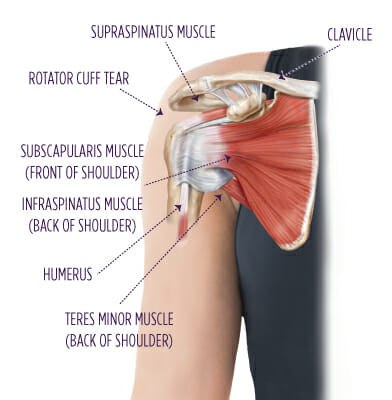
A rotator cuff tear occurs when one or more tendons connecting the shoulder muscles to the bones become damaged. It can result from a sudden injury or develop gradually from wear and tear. This injury often causes shoulder pain, weakness and limited motion, making daily activities, like reaching overhead or sleeping on your side, difficult.
If you have persistent shoulder pain or stiffness, get an accurate diagnosis. At Summit Orthopedics, our specialists in the Minneapolis/St. Paul area offer personalized care—from nonsurgical therapy to advanced surgical repair—to help you regain strength and return to the activities you love.
Understanding Rotator Cuff Anatomy
The rotator cuff is made of four muscles and the tendons that connect them from your shoulder blade to your upper arm bone. These muscles help your shoulder move and keep it steady.
The rotator cuff does two big jobs. It:
- Helps you lift your arms
- Keeps the bones in your shoulder together as you move
The most common injury is to the supraspinatus muscle (one of the four muscles that make up the rotator cuff) because its tendon squeezes through a tight space in your shoulder.
Types of Rotator Cuff Tears
Rotator cuff tears can be big or small:
- Partial tear. The tendon is damaged or frayed but not completely detached.
- Full-thickness tear. The tendon fully separates from the bone, creating a hole.
There are also two ways this can happen:
- Acute (sudden) tears are caused by sudden trauma such as a fall, heavy lifting or sports impact.
- Degenerative tears develop gradually from repetitive use, bone spurs or reduced blood supply and are common after age 40.
Symptoms of a Rotator Cuff Tear
Symptoms depend on whether the tear was acute or degenerative. Acute tears often produce a sudden “pop” accompanied by sharp pain. Degenerative tears usually start as mild discomfort that worsens over time. You may experience:
- Shoulder pain, especially at night or when lying on the affected side
- Clicking or popping with movement
- Weakness when lifting or rotating the arm
- Pain in the upper arm
- Limited range of motion or stiffness
Risk Factors
Understanding your risk factors can help you learn whether you are more likely to experience degenerative tendon damage. Chronic rotator cuff tears often develop gradually in people who:
- Are over age 40
- Have a family history of shoulder problems
- Have a job involving overhead motion (construction, painting, carpentry)
- Play overhead sports (baseball, swimming, tennis)
- Have poor posture
Diagnosing a Rotator Cuff Tear
Accurate diagnosis involves a medical history, physical exam and imaging tests.
During the exam, your doctor will ask about symptoms, triggers and previous injuries, then test shoulder strength and motion.
Based on your exam, your doctor may order an MRI, an imaging test that can help them see whether a rotator cuff is torn. They might order an X-ray to see if arthritis or another condition is causing your pain.
Nonsurgical Treatment
Many partial tears heal without surgery. Treatment focuses on reducing pain and restoring strength and mobility.
Options include:
- Rest and avoiding painful or overhead tasks
- Anti-inflammatory medication to control pain
- Steroid injections, which contain cortisone for pain relief
- Physical therapy, which strengthens muscles around your rotator cuff to help you move better
Most people improve within weeks to months, depending on how bad the tear is and how well they follow therapy recommendations.
Surgical Treatment
Rotator cuff surgery may be necessary if pain lasts a long time, the tear is severe, or your job or sport requires overhead arm use.
Arthroscopic repair is a common, less-invasive surgery using small cuts and a camera to fix torn tendons with stitches. Larger or complex tears may need open surgery with a bigger cut. Your surgeon will pick the best method based on your tear and activity.
After surgery, you’ll wear a sling to support your arm for several weeks. Physical therapy may begin within weeks after surgery and continues as you rebuild stability and flexibility. You’ll need to avoid heavy lifting and overhead work until you’re cleared by your doctor, as early strain can cause re-tearing.
Whether your rotator cuff injury was treated with or without surgery, your recovery time will depend on the severity of your injury and the specific treatment method used.
Prevention Strategies
You can’t always prevent a rotator cuff tear, but you can reduce risk with these steps:
- Strengthen shoulder and back muscles with regular exercise.
- Warm up before activity and stretch afterward.
- Use proper lifting form.
- Take breaks from repetitive movements.
- Maintain good posture during work and daily tasks.
- Rest if you develop shoulder pain.
- Use appropriate protective gear in contact sports.
Rotator Cuff Care at Summit Orthopedics
At Summit Orthopedics, a specialized care team, including physicians, nurses and physical therapists, collaborates to design your treatment and guide your recovery. We provide both nonsurgical and surgical options focused on returning you to your active lifestyle.
Summit Orthopedics surgeons are available at nearly 30 convenient locations across the Minneapolis/St. Paul metro area, serving Minnesota and western Wisconsin. Our state-of-the-art, comprehensive orthopedic centers offer same-day appointments from a team of experts who offer the full scope of orthopedic care.
Find your Summit Orthopedics shoulder expert, request an appointment or call us at (651) 968-5201 to schedule a consultation.