
Arthritis Care
You have a lot riding on your joints. They make movement possible, enabling you to work, exercise, enjoy your favorite pastimes and make memories with the people you love. If you have arthritis, though, your joints can get in the way of your goals. At Summit Orthopedics, our experts help people in the Minneapolis/St. Paul area move past pain, swelling and other symptoms and into a future where arthritis doesn’t stand in the way of being active.
Conditions
Our Approach
Arthritis is extremely common, but your joints, lifestyle and dreams are unique. Your treatment plan will be, too.
If arthritis has a silver lining, it’s the wide range of options available to help. Many people find arthritis pain relief without surgery. Your Summit Orthopedics specialist will start by suggesting conservative treatments that may be right for you, such as over-the-counter or prescription medications or physical therapy. If symptoms continue, surgery, such as joint replacement, may offer the relief you’re looking for.
If you need joint replacement, you’ll be in expert hands at our Vadnais Heights Surgery Center. The center received The Joint Commission’s Advanced Certification for Total Hip and Knee Replacement and is a Blue Cross Blue Shield Blue Distinction Center+® for knee and hip replacement. After your procedure, you’ll stay in one of our upscale hotel-like Care Suites, where our team will use the most up-to-date therapies to manage pain and speed your recovery.
What Is Arthritis?
Your body contains hundreds of joints, which is where two or more bones meet. Arthritis is inflammation (swelling) of the joints. This inflammation causes pain and other symptoms.
Arthritis can develop at any age, but the most common type, osteoarthritis, usually occurs in people older than 50. Without arthritis treatment, the disease can cause significant joint damage that may affect your mobility, independence and quality of life.
Types of Arthritis
More than 100 types of arthritis exist, but just a few account for most cases. Summit Orthopedics specialists treat arthritis affecting joints throughout the body.
Osteoarthritis
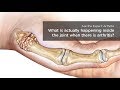
The most common type of arthritis, osteoarthritis breaks down joints’ cartilage, which helps bones move smoothly. Over time, the cartilage may disappear, leaving bones to rub against each other and form tiny growths called bone spurs. Osteoarthritis most frequently affects the knees, hips and low back, among other joints.
Rheumatoid Arthritis
Rheumatoid arthritis is an autoimmune disease, a condition in which your immune system mistakenly attacks healthy cells instead of viruses and bacteria. In this case, the immune system goes after a thin layer of tissue called the synovium. This tissue makes a fluid that lubricates the joints. In rheumatoid arthritis, the synovium thickens, causing pain in the joint. Rheumatoid arthritis can affect any joint, but it’s most likely to occur in the wrist and fingers.
Juvenile Arthritis
A disease that affects children, juvenile arthritis typically occurs in the knees, hands or feet, and it’s usually an autoimmune disease. This condition can disrupt children’s development and, in some cases, damage the organs.
Infectious Arthritis
Infectious arthritis can occur when a bacterium, virus or fungus spreads to a joint from elsewhere in the body. The infection can cause severe joint pain, redness, swelling and a fever.
Psoriatic Arthritis
Another type of autoimmune disease, psoriatic arthritis occurs with a skin condition called psoriasis. This condition causes sore, itchy or scaly patches of skin. Not everyone with psoriasis develops arthritis, and joint symptoms are usually mild.
Gout
An inflammatory disease, gout can occur when too much of a waste product called uric acid builds up in your body. This disease comes and goes in flares that can last a week or more. During these attacks, pain and swelling can affect the joints, with symptoms often starting in the big toe.
Ankylosing Spondylitis
Ankylosing spondylitis usually occurs in the spine, causing back pain. Inflammation affects the areas bones and joints that separate your spine and pelvis. Less commonly, ankylosing spondylitis may develop in joints beyond the spine, such as the knees and hips.
Arthritis Symptoms
Most people with arthritis experience some level of joint pain, but the affected joints may not hurt all the time. Depending on the type of disease, pain may come and go in flares or occur after physical activity. Symptoms often worsen over time.
The signs of arthritis vary by disease type. You may experience:
- Difficulty breathing
- Fever
- Joint pain that ranges from mild to severe and may be constant or intermittent
- Rash
- Reduced range of motion in the joints
- Warmth, redness or swelling in the joints
- Weight loss
Arthritis Causes and Risk Factors
What causes arthritis depends on the type. Osteoarthritis, for example, develops when changes in cartilage drive a breakdown in the tissue over time. For other types of the disease, a faulty immune system, uric acid buildup or an infection is to blame.
Arthritis can affect anyone, but these factors can increase your risk:
- Aging: You’re more likely to experience joint inflammation and muscle loss as you age, and both can contribute to arthritis.
- Excess weight: Too much weight increases stress on your joints and can increase your risk for osteoarthritis of the knees.
- Family history: You have a higher risk for rheumatoid arthritis and ankylosing spondylitis if a parent had it.
- Infections: Certain infections, such as Lyme disease, can lead to joint swelling, which may increase the risk of arthritis.
- Injuries: If you injure the soft tissue in a joint in an accident or by playing sports, you may be more likely to develop osteoarthritis later.
- Sex: Women have a higher risk of osteoarthritis and rheumatoid arthritis. Men are more likely to experience gout.
- Smoking: Smoking can drive inflammation throughout your body, a key contributor to arthritis.t loss
Diagnostic and Treatment Services
Your physician will take your medical history, perform a physical exam, and order blood work and X-rays. They will start at the bottom of the treatment ladder, with the most conservative options, to help you find a therapy that reduces or eliminates pain and improves your quality of life. If nonsurgical options aren’t effective enough, you’ll move up the treatment ladder to less conservative options, such as joint replacement surgery.
From diagnosis to treatment, Summit Orthopedics provides the highest standard of care for people with arthritis. Our services include:
Meet Our Team of Orthopedic Experts
At Summit, each physician works alongside a team of professionals to care for you, our patient.











New Recovery Experience
Summit introduced an innovative and popular new option for joint replacements. Surgery takes place at one of our surgery centers followed by a stay in our Care Suites, which are styled like an upscale hotel environment.
We use the latest pain management methods to reduce postoperative discomfort as well as the most advanced therapies to speed recovery. We also perform joint replacement surgeries at local hospitals. Together with your surgeon, you’ll discuss options for your unique situation.

Award-winning, advanced facilities
Summit Orthopedics’ Vadnais Heights Surgery Center received The Joint Commission’s Advanced Certification for Total Hip and Total Knee Replacement. The center is one of a select few to receive the prestigious certification. We track the results of our care; learn what to expect after a total knee replacement.
Ask the Expert Video Series on Arthritis
17 videos in this series
-
Is there any benefit to early arthritis diagnosis and treatment?

-
How do I know if I have Arthritis?

-
Does exercise help or hurt my arthritis?

-
How does the doctor diagnose arthritis?
-
Evaluating Options for Joint Replacement Surgery

-
Arthritis is just a disease of old age, right?

-
Managing Arthritis Symptoms

-
Can arthritis be prevented?

-
Do the foods I eat ease arthritis?

-
Glucosamine and Chondroitin Supplements

-
Impacts of Diets and Supplements on Arthritis

-
Does weight have any impact on arthritis symptoms?

-
Inside an Arthritic Joint
-
Summit Orthopedics at HealthEast Sports Center

-
Does exercise help or hurt my arthritis?

-
Is hot or cold better for arthritic joints?

-
Joint preservation symptoms and causes

replace_with_js
Survey feedback for replace_with_js
07/03/2026
Reviews